
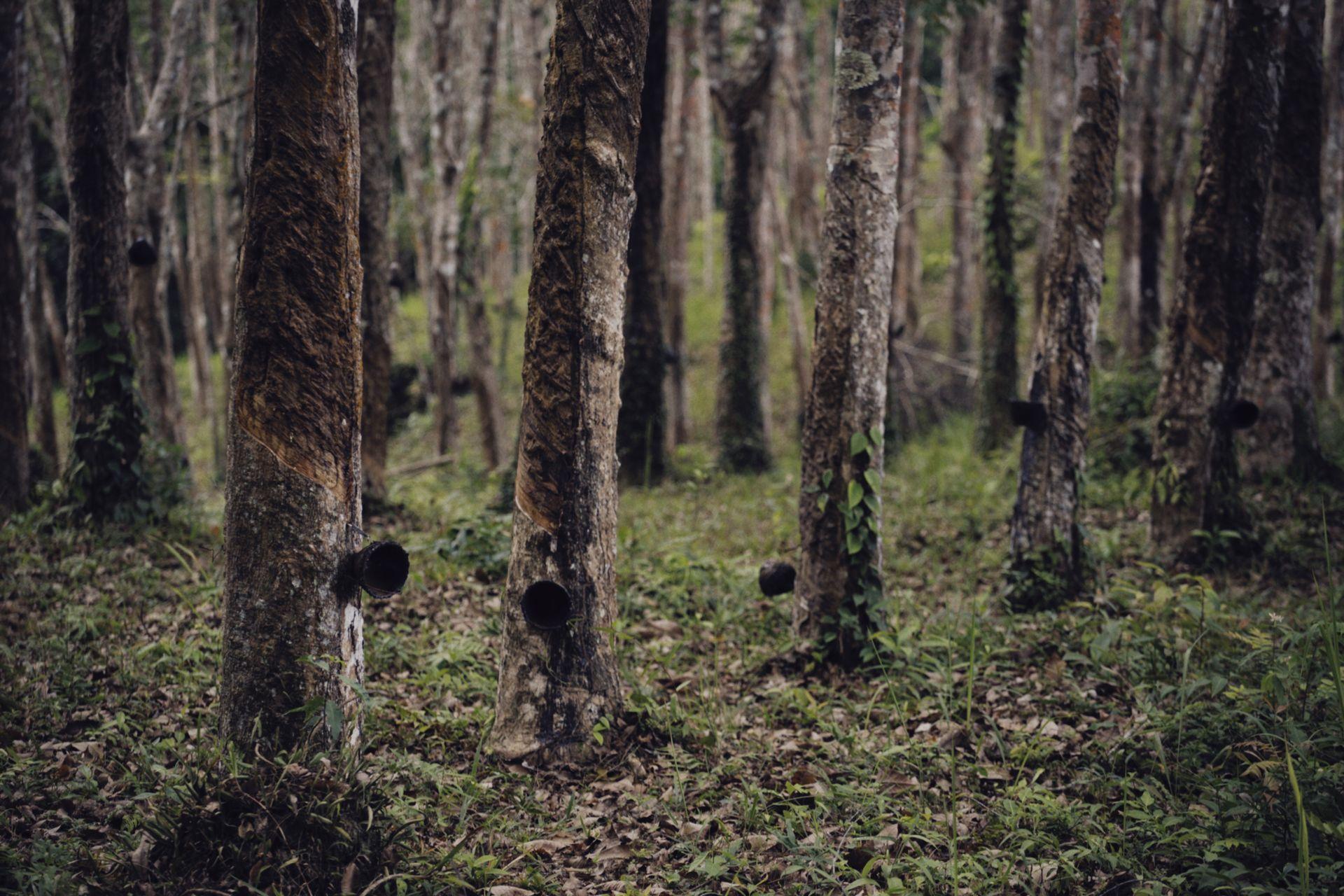
We supply TSR10 and TSR20 natural rubber produced in Liberia, sold under our own contract and inspected by an independent surveyor before loading. Buyers are tyre makers, rubber goods manufacturers and rubber importers, and we ship worldwide. Payment terms are flexible, including letters of credit and payment after delivery.
You deal with one counterparty. We handle sourcing, quality control, documents and shipment, and we carry the contract obligations if anything falls short of specification.
TSR10 and TSR20: which grade
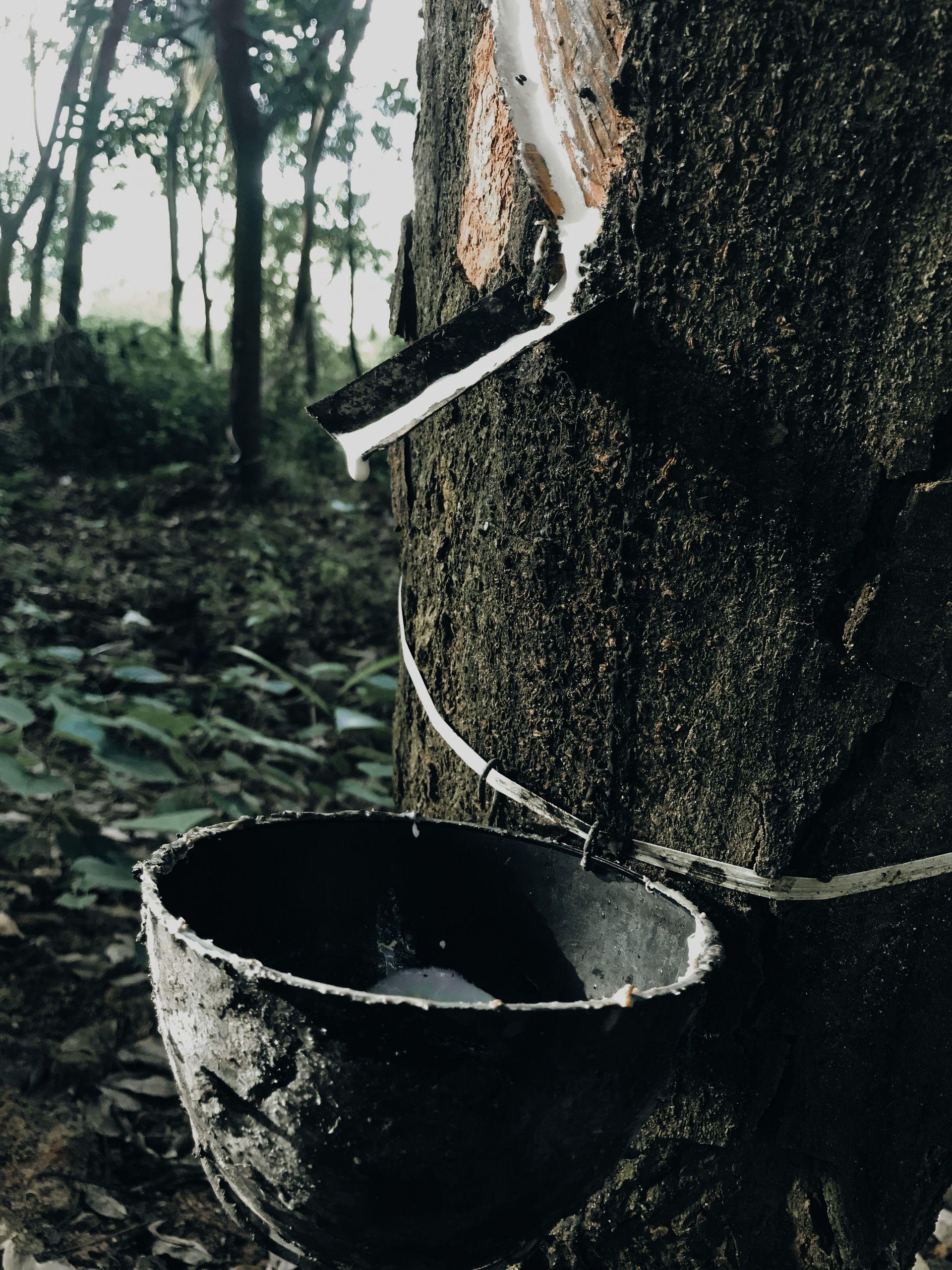
Both grades are technically specified natural rubber, produced from field coagulum (cup lump and tree lace), which is cleaned, crumbled, washed, dried and pressed into bales. Both are defined by laboratory limits rather than visual inspection.
- TSR20 is the standard grade for tyre carcasses, truck and bus tyres, conveyor belts, hoses and moulded goods.
- TSR10 is made from cleaner, fresher coagulum with closer process control. It has tighter limits on dirt and ash, and a higher minimum PRI. That makes it the better choice where fatigue life matters, such as engine mounts and some tyre components.
Our guide to TSR10 vs TSR20 vs RSS compares the grades in detail.
Specifications
The figures below are the ISO 2000 limits for each grade. Your contract states the binding figures, and tighter limits can be agreed.
| Parameter | TSR10 | TSR20 | Test method |
|---|---|---|---|
| Dirt (retained on 45 µm sieve) | 0.08% max | 0.16% max | ISO 249 |
| Ash | 0.60% max | 0.80% max | ISO 247 |
| Volatile matter | 0.80% max | 0.80% max | ISO 248 |
| Nitrogen | 0.60% max | 0.60% max | ISO 1656 |
| Initial plasticity (Po) | 30 min | 30 min | ISO 2007 |
| Plasticity retention index (PRI) | 50 min | 40 min | ISO 2930 |
| Mooney viscosity ML(1+4) 100 °C | Agreed per contract | Agreed per contract | ISO 289 |
Our detailed guide to TSR20 test parameters explains what each limit means for your compound.
Why buy Liberian rubber through a trader
Liberia has grown rubber commercially for about a century, on large estates and on a great many smallholder farms. That mix gives volume, but it also means rubber passes through many hands before it reaches a processing factory. For a buyer abroad, the hard part is not finding rubber. It is knowing that the rubber in your container is the rubber in the contract.
That is the work we do:
- Consolidation. We assemble full container loads of consistent quality, so you are not managing several small sellers.
- Quality control. Every lot is sampled and tested by an independent surveyor before loading. You receive the certificate of analysis before you pay against documents.
- Flexible payment. Letters of credit and payment after delivery are both possible.
- One accountable contract. Specification, weight, delivery and claims are covered by a single contract with us.
Our guide on why use a trader instead of buying direct sets out the trade-offs in more detail.
Packing and container loads
TSR10 and TSR20 are packed in bales wrapped in polyethylene film, then either loaded loose or on pallets.
| Item | Typical figure |
|---|---|
| Bale weight | 35 kg |
| Bales per pallet | 36 |
| Net weight per pallet | 1.26 tonnes |
| Net weight per 20ft container | about 20.16 tonnes |
| HS code | 4001.22 (technically specified natural rubber) |
Use our container calculator to estimate bales, pallets and containers for your order.
Quality control before loading
Rubber quality problems are expensive to fix after arrival. Our process is designed to catch them in Liberia:
- Choice of surveyor. You can appoint your own surveyor, or we propose one of the independent surveyors we work with and confirm the choice with you before loading.
- Lot formation. Bales are grouped into lots by production batch.
- Sampling. The surveyor draws samples from each lot according to the sampling plan in the contract.
- Testing. Samples are tested for the parameters in the table above. Lots that fail are not loaded.
- Loading supervision. The surveyor supervises container stuffing, records bale counts and seals containers.
- Documents. The certificate of analysis, weight certificate and packing list are issued with the shipping documents.
Read more about inspection, sampling and certificates of analysis.
EUDR: where we stand
Natural rubber is one of the seven commodities covered by the EU Deforestation Regulation (EUDR). From 30 December 2026, large and medium operators placing rubber or listed rubber products on the EU market must show that the rubber was produced on land not deforested after 31 December 2020, that it was produced legally, and that it is covered by a due diligence statement.
Our rubber is not yet EUDR compliant. We are aware of the regulation and are working towards compliance, including the plot mapping and traceability records EU importers will need. EU buyers should discuss their EUDR requirements with us before contracting. Buyers outside the EU are not affected.
See our EUDR status for more on our approach.
Shipment and commercial terms
We ship from the Freeport of Monrovia to any port worldwide.
- Grades: TSR10 and TSR20
- Payment terms: flexible, including letters of credit and payment after delivery. Contact us to discuss.
- Incoterms: agreed per contract, including FOB Monrovia, and CFR or CIF to your port
- Minimum order: one 20ft container
- Lead time: agreed per contract, depending on grade and volume
- Volumes: regular monthly programmes or single shipments
Prices follow the market. Most physical technically specified rubber is priced with reference to SICOM TSR20 futures plus or minus a premium for grade, origin, quality and freight. We quote firm prices on request.
Who buys our natural rubber
- Tyre manufacturers using TSR20 in carcass and truck tyre compounds, and TSR10 where higher purity is needed
- Rubber goods manufacturers making belts, hoses, mats, footwear, mounts and moulded parts
- Rubber importers and distributors supplying smaller manufacturers in their own markets
If you are qualifying a new origin, start with a sample and a trial container. Our guide to ordering samples and pre-shipment inspection explains the steps.