
A TSR20 shipment from Liberia moves through seven stages: tapping and collection of cup lump on farms and estates, processing into crumb and bales at a factory, laboratory testing, lot formation, independent inspection, container stuffing and sealing, and sailing from the Freeport of Monrovia with the shipping documents. From contract to sailing, the process usually takes a few weeks, depending on availability and vessel schedules.
This guide follows one shipment from tree to vessel. For the product itself, see TSR20 natural rubber from Liberia.
1. Tapping and collection
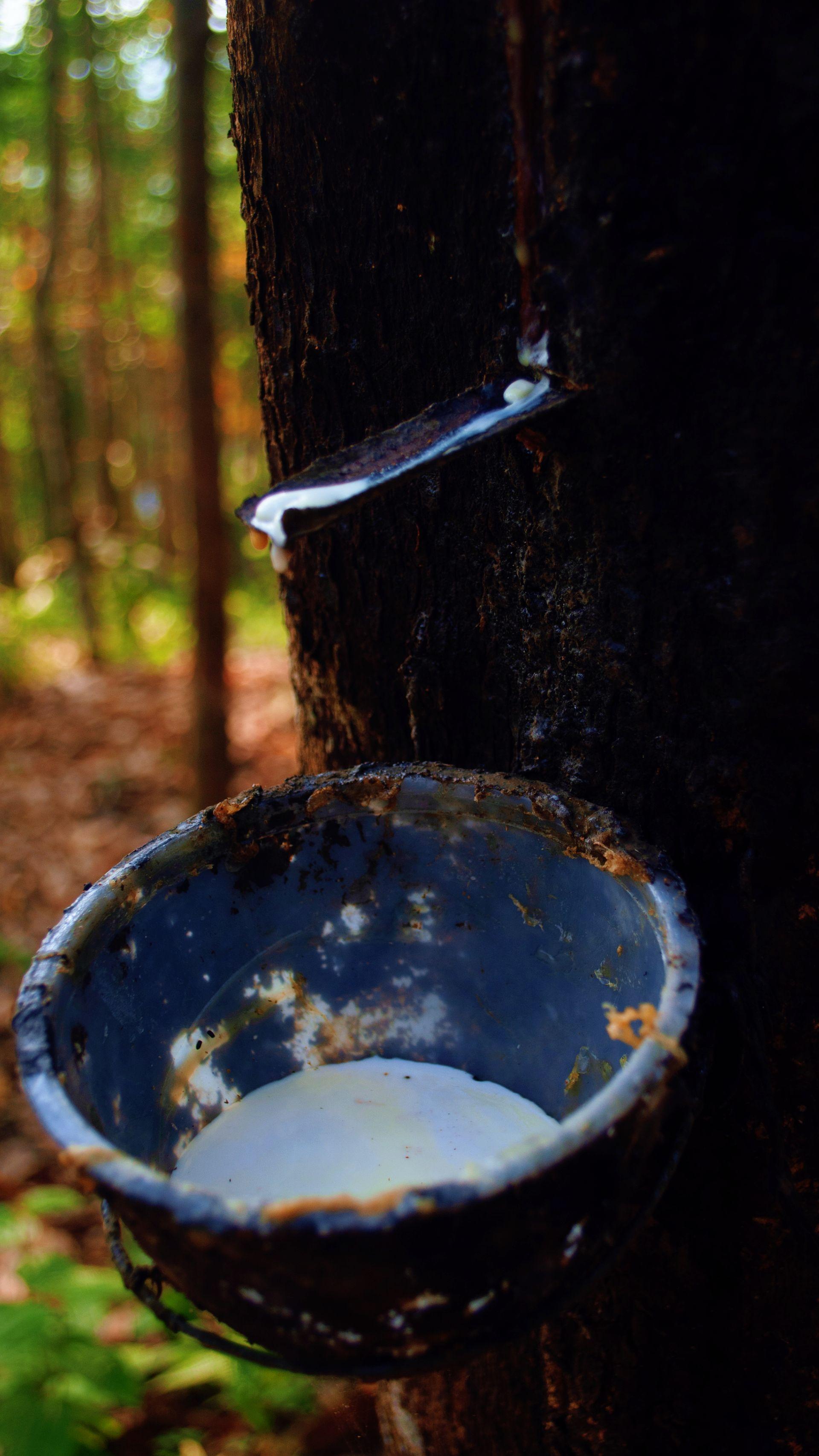
Rubber trees are tapped by cutting a thin groove in the bark. Latex flows into a cup, where it coagulates naturally into cup lump. Tappers also collect tree lace, the strip of rubber that dries in the groove.
Cup lump is collected from farms and estates and taken to collection points or directly to the factory. Under the EUDR, this is where traceability has to start: each delivery for the EU needs to be recorded against a mapped farm. See geolocation and traceability data.
The quality of the finished TSR20 depends heavily on this stage. Clean cups, quick collection and dry storage keep dirt low and PRI high.
2. Processing at the factory
At the factory, cup lump is:
- Blended to even out variation between deliveries
- Cleaned and size-reduced through pre-breakers, cutters and creper mills, with plenty of water
- Crumbled into small granules
- Dried in a continuous dryer at controlled temperature
- Pressed into bales, typically 35 kg
Washing removes sand and bark, which controls dirt and ash. Drying controls volatile matter. Too much heat in the dryer lowers PRI, so dryer control is one of the most important parts of the process.
3. Laboratory testing
The factory laboratory tests production for dirt, ash, volatile matter, nitrogen, Po and PRI, and Mooney if required. Production that fails is downgraded or reprocessed. For what each test means, see TSR20 specifications explained.
4. Lot formation and wrapping
Bales are wrapped in polyethylene film, labelled with grade, lot and producer codes, and grouped into lots. Bales are either kept loose or stacked onto pallets, depending on the buyer's request. See TSR20 container loading.
5. Independent inspection
Before loading, an independent surveyor draws samples from each lot under the agreed plan and tests them against the contract. The surveyor checks bale count, weights, wrapping and pallet condition. Lots that fail are not loaded. See inspection and certificates of analysis.
6. Container stuffing and sealing
Empty containers are inspected for damage, holes, wet floors and odours. Bales or pallets are loaded under supervision, the surveyor records the count and the container is sealed. Seal numbers go on the bill of lading.
Containers are then trucked to the Freeport of Monrovia for export clearance and gate-in before the vessel's cut-off.
7. Documents and sailing
When the vessel sails, the shipping line issues the bill of lading. We then assemble the document set: invoice, packing list, certificate of analysis, weight certificate, certificate of origin. Documents go to the buyer or through the banks, depending on the payment terms. See export documents explained.
Transit times depend on the route and transhipment port. Our guide to shipping from Monrovia gives indicative times.
Where delays happen
| Stage | Common cause of delay |
|---|---|
| Collection | Heavy rain on farm roads during the wet season |
| Processing | Raw material shortage in low tapping months |
| Inspection | Lot fails and must be replaced |
| Port | Vessel delays or missed cut-offs |
| Documents | Errors that need correction before bank presentation |
We plan around these with buffer stock and early bookings, and we tell buyers as soon as a date is at risk.